Describe The Premises
Tell us the site postcode, building use and cleaning problem. Include approximate floor area, opening hours and whether you need regular visits or a one-off project.
FOR THE PLACES GLASGOW GETS TO WORK
Offices, schools, industrial premises and shared spaces. Get the cleaning tasks, timings and priorities straight, so your business can get on with its week.
Let’s sort your cleaningDesks • meeting rooms
Fixtures • touchpoints
Vacuum • damp clean
Sinks • worktops
Shared spaces • bins
Edges • door furniture
Walkways • entrances
Clean • check • replenish
Meeting rooms • kitchens
Checks • report • reset
Choose a regular service, a focused project or a combination. The useful starting point is what your building needs each week.
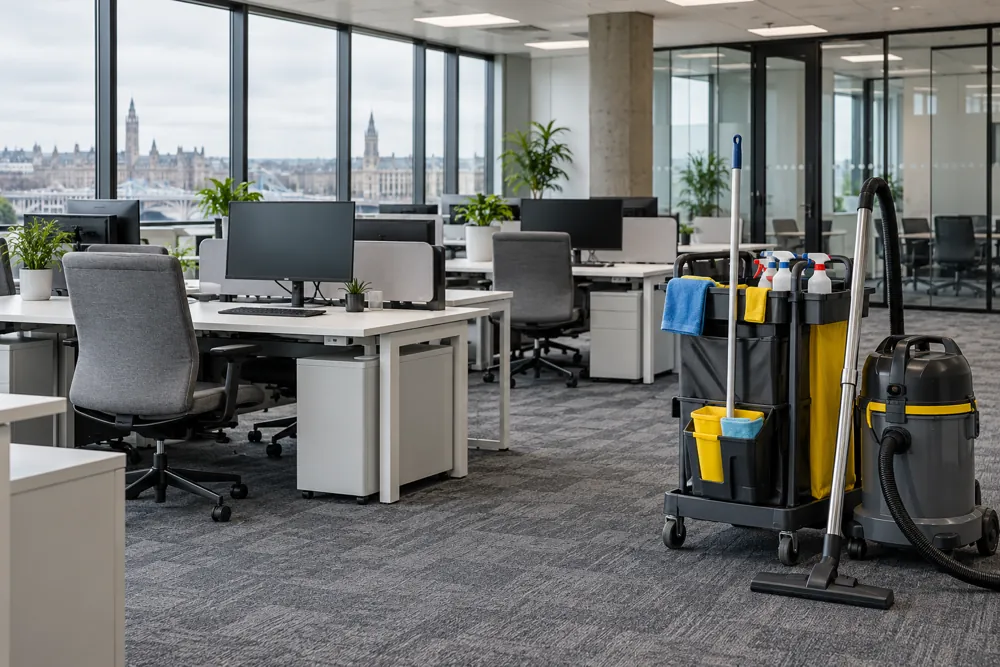
A clean office should be ready before the first meeting, without interrupting the people who use it.
Explore the service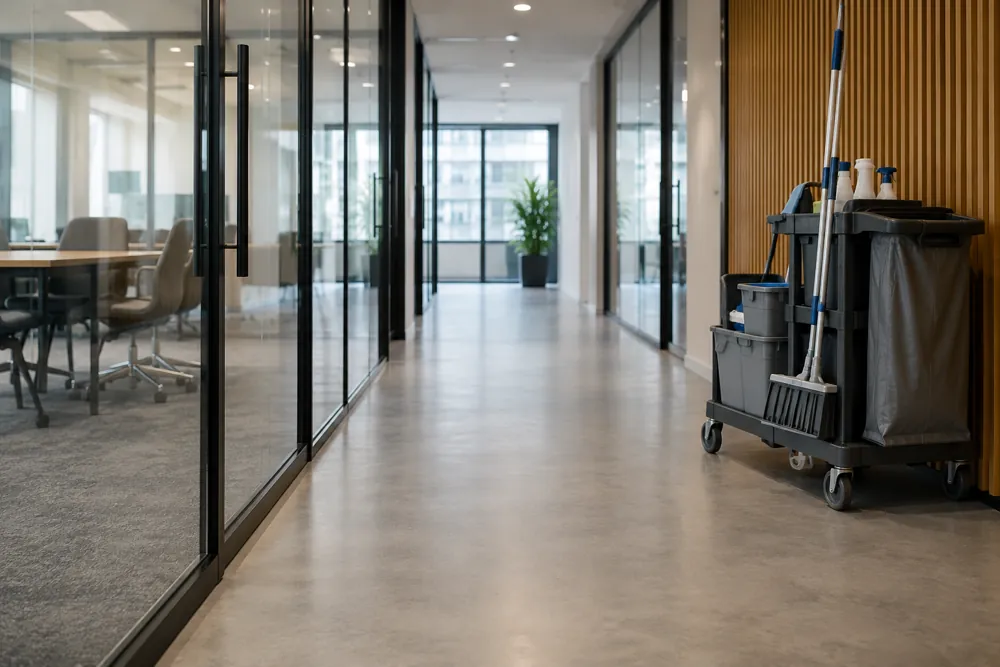
Contract cleaning gives a business a repeatable programme rather than a succession of loosely defined visits.
Explore the service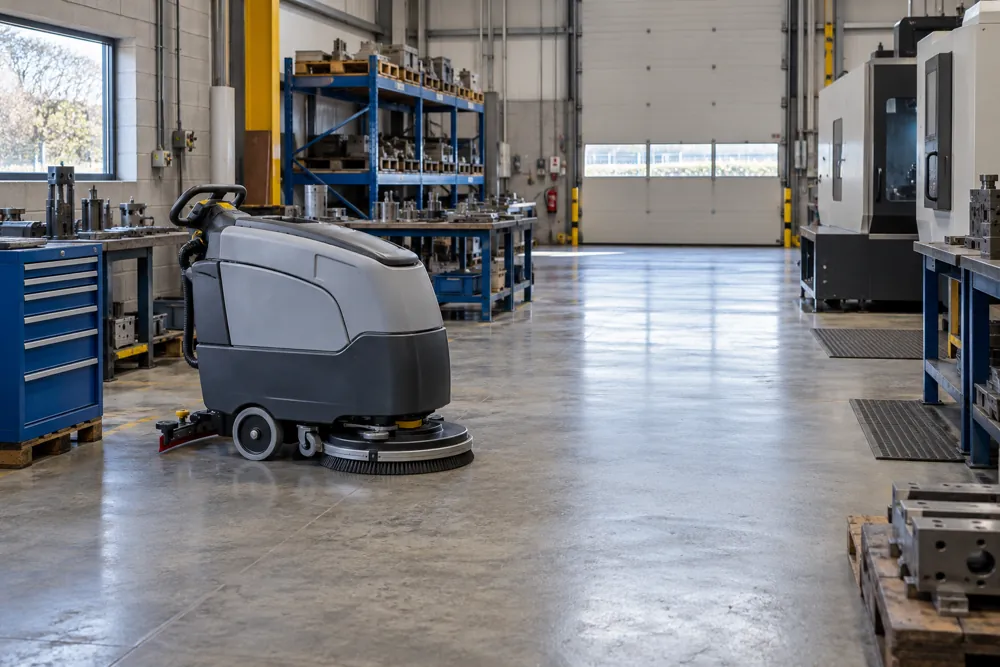
Industrial cleaning needs to respect production, vehicle movements and the materials handled on site.
Explore the service
School cleaning has to work around learning, clubs and the safe use of shared spaces.
Explore the service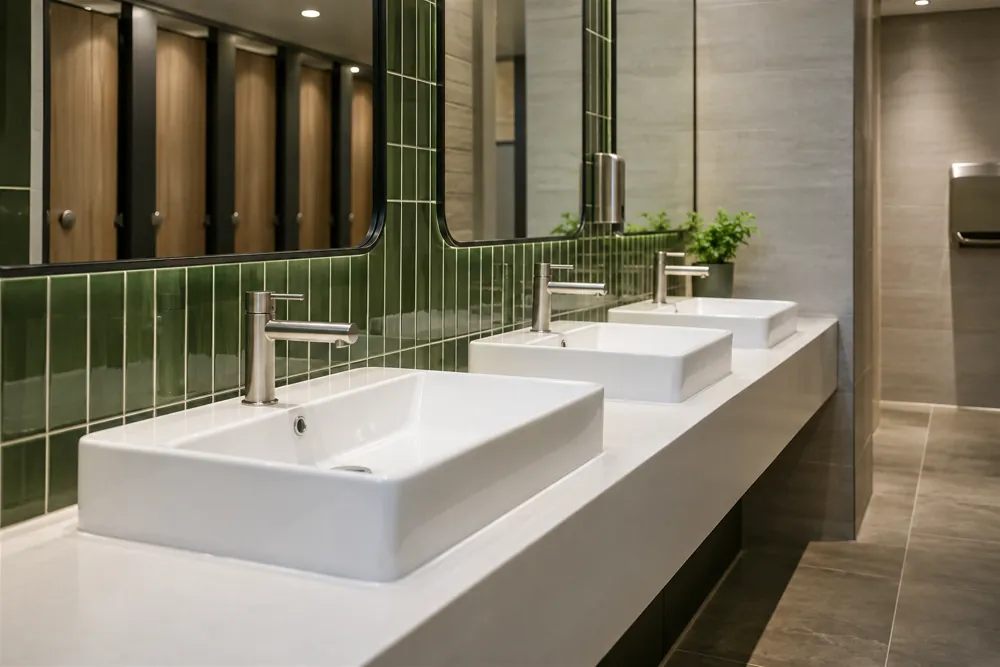
Commercial washrooms need more than a quick visible tidy.
Explore the service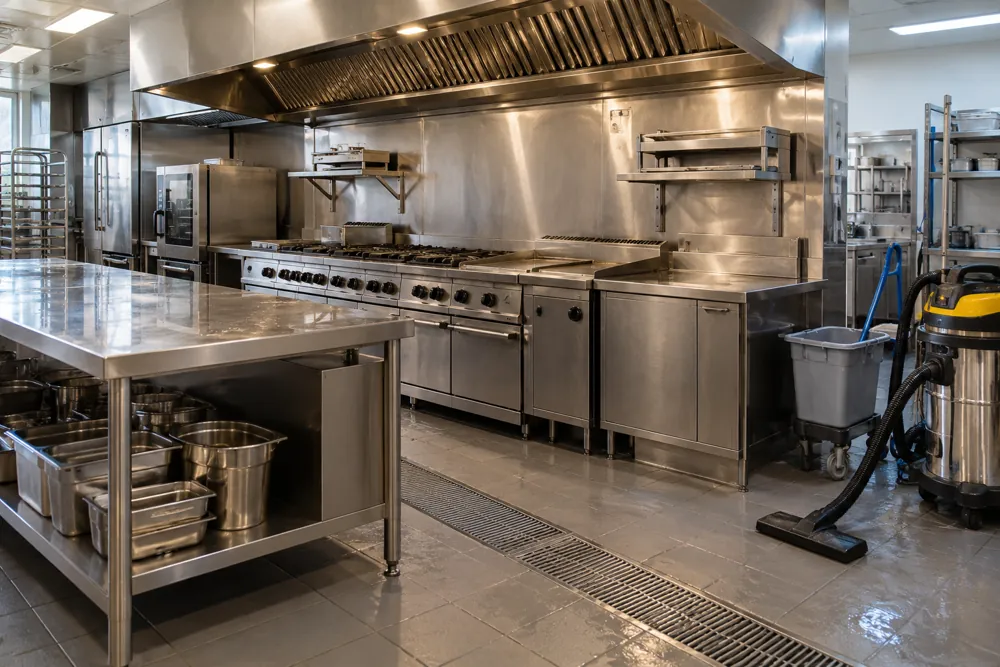
A commercial deep clean tackles accumulated soil and less accessible surfaces beyond the normal rota.
Explore the service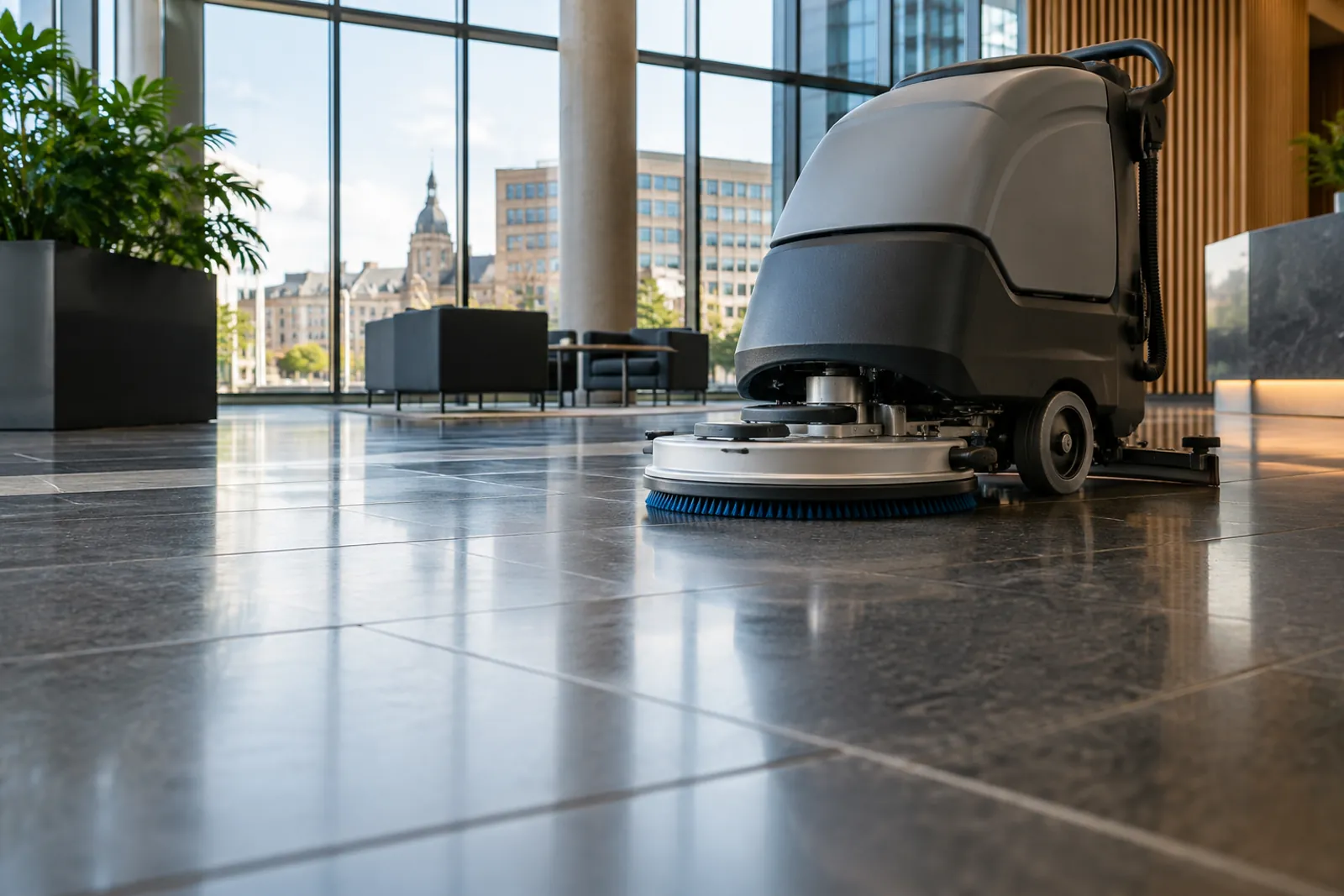
Commercial cleaning is the organised upkeep of business premises, from occupied office floors to staff facilities inside an industrial unit. It combines routine removal of soil and waste with periodic attention to the places that are easily missed during a busy working day.
We start by asking which spaces are used, what happens in them and when cleaning can happen safely. That turns a broad request for a cleaner building into something a facilities manager can price, schedule and review.
A useful specification explains the result expected for each area. A reception carpet, a kitchen worktop and a warehouse walkway do not need the same method, and a clean-looking surface is not automatically suitable for every activity.
The service should also say what falls outside the routine. High-level access, specialist contamination, internal machinery work and extensive furniture movement need their own assessment, rather than a casual addition to a general cleaning visit.
Employers and people controlling premises have responsibilities for workplace conditions. Under the Workplace (Health, Safety and Welfare) Regulations 1992, workplaces and their fittings must be kept sufficiently clean, and waste should not accumulate outside suitable receptacles where reasonably practicable. These rules apply in Scotland as well as England and Wales.
The law does not impose a universal requirement to hire a cleaning company. An office, school or warehouse may use suitable in-house arrangements, an external contract or both, provided the actual duties are met. Responsibility does not disappear because a task has been contracted out.
Cleaning activity must also be safe. HSE guidance explains that wet floors and trailing equipment can create hazards during the clean itself, so barriers, appropriate timing and a suitable drying method belong in the plan.
For businesses preparing or handling food, cleaning also forms part of food safety management. Food Standards Scotland guidance is the relevant starting point for Scottish food businesses, rather than assuming an English checklist applies unchanged.
Tell us the site postcode, building use and cleaning problem. Include approximate floor area, opening hours and whether you need regular visits or a one-off project.
The scope identifies rooms, finishes, contamination and access restrictions. A visit may be needed where photographs and an initial discussion cannot establish a reliable task list.
Review tasks, frequency, supplies, security and exclusions before accepting a quote. Discuss how missed access, unexpected conditions and additional work will be handled.
Use the agreed specification to review the result. Changes in occupancy, room use or operating hours should trigger a discussion about the schedule rather than an informal expansion of duties.
Begin with a list of rooms and the surfaces within each one. Identify accessible desks, sanitary fittings, entrance flooring and food preparation surfaces, then state the task and frequency instead of simply writing general clean.
Allocate responsibility for supplies. Cleaning chemicals, machinery, soap, paper products and waste sacks are separate items, and a quotation should explain whether they are provided, stored on site or purchased by your business.
Write down access instructions before the first visit. Keys, alarm procedures, restricted rooms, delivery routes and a named site contact help avoid missed work and prevent cleaning activity from drifting into areas without permission.
Include a way to record defects and work that cannot proceed. A leaking fitting, damaged floor or blocked route should be reported as a building issue, with the affected area and any immediate action described clearly.
Cleaning products need to suit the surface and the task. A detergent that removes grease may damage a sensitive finish, while excess product can leave a residue that attracts soil or affects the floor underfoot.
The HSE guidance for cleaners under COSHH highlights exposure risks from cleaning chemicals and wet work. Product information, safe dilution, storage and suitable protection should inform the method, rather than assuming gloves alone solve every risk.
Use separate equipment for washrooms and food areas, and agree how reusable cloths and mop heads are changed and cleaned. Cleaning removes dirt, while any necessary disinfection is a distinct step using an appropriate product and contact time.
Floors need particular care during opening hours. A warning sign does not physically stop someone walking onto a wet surface, so the method may require sectional cleaning, barriers or an alternative work window.
A useful quote reflects productive work rather than a headline figure based only on square metres. Layout, occupancy and the amount of furniture can make two similarly sized floors take very different amounts of time to clean.
Washroom provision and kitchen use often have a large effect on the schedule. A building with public visitors, several toilets and busy shared food areas needs a different specification from a quieter office with similar floor space.
Frequency and access also matter. Restricted cleaning windows, multiple levels, security procedures and a need to avoid production traffic can change staffing or equipment choices, and should be discussed before comparing quotations.
Periodic work should be visible in the price. Carpet extraction, floor treatments, detailed descaling and commercial handover cleaning may be separate from routine visits, while soap and paper stock may sit under another supply arrangement.
For a useful comparison, ask each proposal to describe the same areas, frequencies and exclusions. A cheaper quotation with fewer visits or omitted periodic tasks is a different scope, even if its summary uses the same service name.

Glasgow’s commercial settings call for different cleaning plans. Office space around Broomielaw and Atlantic Quay needs attention to shared access and presentation, while Hillington’s industrial and warehouse premises bring different floor and traffic considerations.
Merchant City and the wider innovation district include offices and business space around streets such as Trongate and Queen Street. In the east, Clyde Gateway links Bridgeton, Dalmarnock and Rutherglen, with further commercial and manufacturing development around Shawfield.
These are local settings, rather than claims about clients or previous projects. Tell us which building you manage, how it is occupied and where cleaning currently falls short, so the discussion can focus on your actual requirements.
Explore Glasgow and nearby coverage →A regular rota should handle daily soil before it becomes ingrained. Periodic work then addresses tasks that take longer, require a different method or need more space than an ordinary visit allows.
A business moving into or handing back premises may need a commercial deep clean with a separate condition record. Agree the landlord’s requirements where available, but do not treat cleaning as a guarantee about deposit deductions or the condition of worn finishes.
Food areas, industrial work zones and schools may each need additional controls. Tell us about those requirements early so the right questions are answered before work is priced, rather than leaving specialist tasks hidden inside a broad request.
Moving segregated waste to the agreed internal collection point is different from transporting waste away from the premises. The scope should distinguish those jobs and identify the authorised waste arrangements if collections are involved.
In Scotland, SEPA’s waste duty of care guidance explains responsibilities across the waste chain. Keep cleaning responsibilities and waste contractor responsibilities visible, including the relevant records where waste is transferred.
Security instructions should be equally practical. Decide who holds access information, what happens if a room is unavailable and who signs off any change, so a cleaning visit ends with the premises handed back in the agreed condition.
Commercial cleaning in Glasgow is priced from the actual tasks, frequency and access arrangements, rather than a universal rate per building. Floor area, occupancy, toilets, consumables and specialist treatments all affect the work. Share a postcode, approximate size and preferred schedule so the quotation can explain what is included and which tasks need separate approval.
Business cleaning frequency should follow use, contamination and risk, with extra attention to busy shared facilities. A heavily used washroom and a quiet meeting room need different schedules. Start with the areas that must be ready each day, then allocate weekly detail work and periodic treatments instead of applying one frequency to every surface.
Cleaning outside opening hours can be considered where safe access, security and staff availability can be agreed. Tell us your opening times, alarm arrangements and any restrictions on lone working or noise. Evening, early morning and weekend requirements should be discussed during scoping rather than assumed to be available for every location or task.
Businesses do not generally need an external cleaning contractor simply because they employ people. They do need to meet applicable workplace cleanliness and safety duties, which can be addressed through suitable in-house or contracted arrangements. The appropriate method depends on the premises and risks, and appointing a contractor does not remove the employer’s own responsibilities.
A cleaning quote should list the rooms, tasks and frequencies, along with the cleaning window and any included materials. Ask whether equipment, washroom supplies, periodic treatments and waste removal are covered. Clear exclusions matter as much as the task list, particularly for high-level work, specialist contamination and areas that need separate access permission.
A one-off commercial clean can be scoped for an agreed project, such as a detailed reset or a commercial tenancy handover. Describe the condition, surfaces and deadline before work is scheduled. Furniture clearance, drying time and any landlord requirements should be discussed so the clean has a practical finish point and written boundaries.
Glasgow cleaning enquiries can cover the city centre and surrounding commercial districts, including Hillington, Rutherglen and Dalmarnock. The type of work and practical travel arrangements affect availability, so provide the full site postcode. The areas page explains the local commercial settings and helps distinguish a coverage enquiry from a confirmed booking.
Your cleaning enquiry is used to understand the work, location and preferred contact method. Where a suitable local firm is needed, your agreement is requested before your details are passed on. Sending the form does not book a visit or accept a quotation, and you should wait for the scope and arrangements to be confirmed.
A regular rota or a one-off reset. Share a few details about your commercial premises and the cleaning you need.
No booking is made by sending this form. The scope and quotation are agreed before work begins.