What The Service Covers
Deep cleaning is a scoped project rather than a promise to clean everything in a building. It may include detailed floor work, accessible high-level surfaces, edges, fixtures and kitchen or washroom detail, with exclusions written down before equipment arrives.
The work begins with an agreed list rather than an assumption that every visible item is included. Tell us about sensitive finishes, items that must not be moved and any surfaces where a manufacturer’s cleaning instructions apply.
Tasks To Put In The Specification
- Record the condition and list the areas needing detailed treatment
- Identify finishes, contamination and safe access requirements
- Agree furniture movement and protect items outside the cleaning scope
- Carry out the stated tasks with suitable dwell and drying time
- Walk through the result and record any remaining defects or exclusions
For commercial tenancy handovers, ask for the landlord’s schedule of condition or cleaning requirements where available. Cleaning can improve presentation, but it does not repair defects, remove every permanent stain or guarantee acceptance of a lease handback.
When To Review Your Cleaning
Deep cleaning is useful when routine work no longer removes ingrained soil, before a commercial unit is handed over or when a periodic maintenance plan has fallen behind. It should not be used as a substitute for correcting leaks, damaged surfaces or an inadequate daily cleaning schedule.
The method needs to match the finish and contamination. Carpet extraction, machine scrubbing and targeted degreasing have different preparation and drying needs, and a small test area can identify surface sensitivity before treating a larger visible area.
Safety And Relevant Requirements
The cleaning method must protect people using the premises as well as those doing the work. The HSE cleaning guidance on slips explains why timing, floor drying and keeping people away from wet areas need attention.
The Control of Substances Hazardous to Health Regulations 2002 apply where hazardous substances create exposure risks. Use product information to assess the task, select suitable controls and agree secure storage, rather than treating a safety data sheet as a complete risk assessment.
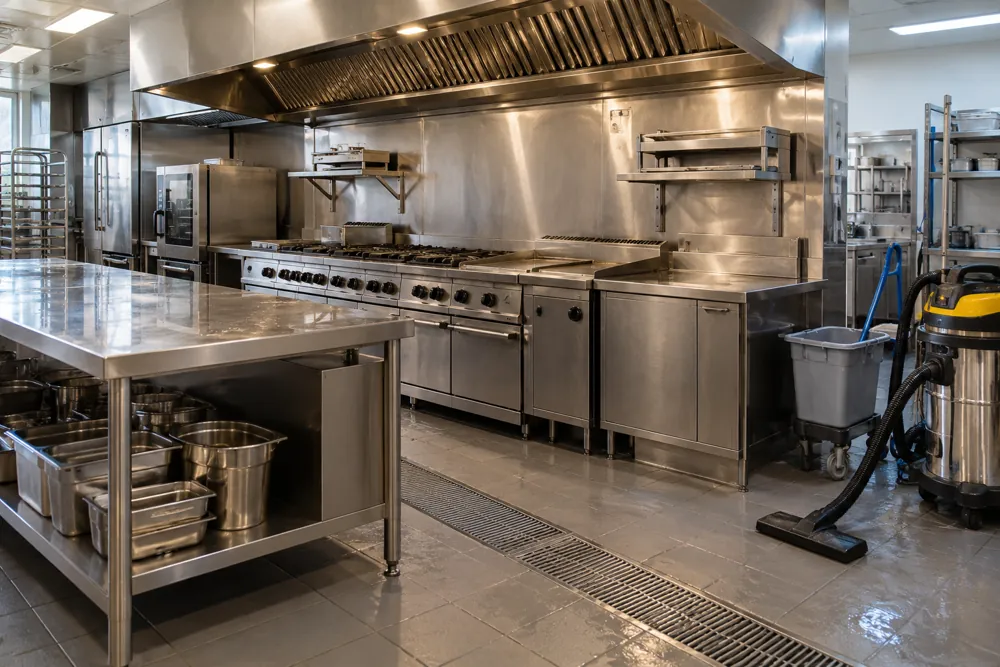
Food preparation areas need cleaning methods that fit the business’s food safety controls. Cleaning removes soil before any necessary disinfection, and products used on food-contact surfaces must be suitable for the purpose and follow the manufacturer’s instructions, including any required rinse.
From Initial Scope To Handover
- Describe the setting. Share the building use, postcode, access times and known problems, with photographs where useful.
- Assess the method. Agree surfaces, equipment, supplies and any restrictions before committing to the work.
- Confirm the scope. Check the task list, frequency, exclusions and responsibilities in the quotation.
- Check the result. Review the agreed areas and record inaccessible tasks, damage or changes needing a further decision.
What Affects The Cost
The condition at the start, furniture clearance, access height and chosen treatments matter as much as floor area. Photographs help with an initial discussion, but heavy contamination or unclear access can require a visit before a reliable scope and quotation are possible.
Ask the quote to separate recurring tasks from periodic work. A useful comparison includes the same frequency and materials, and explains how additional tasks will be authorised before they are charged.
Information To Share Before Work Starts
A safe, productive visit depends on the practical details being agreed beforehand. Provide the cleaning window, a contact for access problems and any restrictions on water, power or equipment storage.
Explain how defects are reported and who can approve extra work. If the condition found on arrival differs from the original description, the scope should be reviewed before a different method or additional task is attempted.
For the wider service and related cleaning options, see commercial cleaning Glasgow. You can also check the areas covered or send the details for a quote.
Cleaning Questions, Answered
Is A Deep Clean The Same As Disinfection?
A deep clean is different from disinfection because its main purpose is to remove accumulated dirt and residues from agreed surfaces. Disinfection is a separate controlled step where needed, using a suitable product after cleaning. The scope should identify which areas need either process, the required contact time and when the area can return to use.
How Is The Cleaning Scope Confirmed?
The cleaning scope is confirmed by agreeing the areas, tasks, access and expected result before work is scheduled. Supply photographs or arrange an assessment where the condition is unclear. Check the written quotation for exclusions and periodic tasks, and ask how changes will be approved if the site conditions differ from the original description.
What If A Surface Is Already Damaged?
A damaged surface should be identified before cleaning begins, especially where cracks, loose finishes or worn coatings could affect the method. Cleaning cannot repair an underlying defect or promise to remove permanent staining. Record the condition, agree any test area and discuss whether maintenance work is needed before a treatment can proceed safely.