What The Service Covers
The starting point is the type of contamination, not simply the size of the unit. Packaging dust, tracked grit and oily residues need different methods, and machinery, stored goods and pedestrian routes can make an apparently open floor difficult to clean safely.
The work begins with an agreed list rather than an assumption that every visible item is included. Tell us about sensitive finishes, items that must not be moved and any surfaces where a manufacturer’s cleaning instructions apply.
Tasks To Put In The Specification
- Assess floor condition, contamination and safe access to each zone
- Separate cleaning activity from forklifts and delivery movements
- Select compatible equipment for sealed concrete and other finishes
- Clean accessible warehouse edges, pedestrian routes and welfare rooms
- Agree inspection, drying and return to use before reopening an area
Industrial does not mean that all contaminants are safe for a general cleaning team. Suspected asbestos, unknown powders, hazardous residues, confined spaces and combustible dust need specialist assessment, and the work must stop at the boundary of the agreed safe method.
When To Review Your Cleaning
A review is useful when dust returns quickly, marked walkways become obscured or forklift traffic carries contamination into staff areas. Planned shutdowns, changes in stock layout and preparation for a new occupier can also create a sensible window for a more detailed clean.
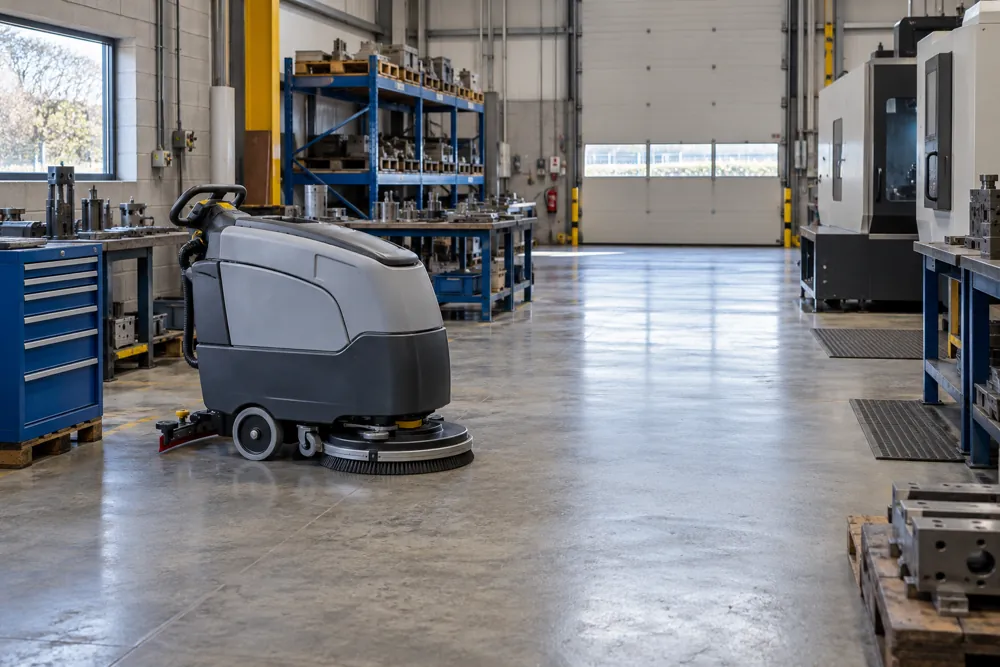
A walk-behind scrubber dryer can be useful on suitable open floors, but its footprint, turning space and water recovery must suit the building. Narrow aisles, racking legs and damaged joints often require a different approach from the main circulation area.
Safety And Relevant Requirements
The cleaning method must protect people using the premises as well as those doing the work. The HSE cleaning guidance on slips explains why timing, floor drying and keeping people away from wet areas need attention.
The Control of Substances Hazardous to Health Regulations 2002 apply where hazardous substances create exposure risks. Use product information to assess the task, select suitable controls and agree secure storage, rather than treating a safety data sheet as a complete risk assessment.
Machinery cleaning requires instructions from the responsible site manager and a suitable isolation procedure where relevant. Cleaning around equipment must not become permission to remove guards, enter restricted zones or reach into a live process.
From Initial Scope To Handover
- Describe the setting. Share the building use, postcode, access times and known problems, with photographs where useful.
- Assess the method. Agree surfaces, equipment, supplies and any restrictions before committing to the work.
- Confirm the scope. Check the task list, frequency, exclusions and responsibilities in the quotation.
- Check the result. Review the agreed areas and record inaccessible tasks, damage or changes needing a further decision.
What Affects The Cost
Contamination, access restrictions, racking density, floor condition and shutdown windows all influence labour and equipment choices. Disposal arrangements, specialist access and any need to work in stages should appear in the scope before a price is accepted.
Ask the quote to separate recurring tasks from periodic work. A useful comparison includes the same frequency and materials, and explains how additional tasks will be authorised before they are charged.
Information To Share Before Work Starts
A safe, productive visit depends on the practical details being agreed beforehand. Provide the cleaning window, a contact for access problems and any restrictions on water, power or equipment storage.
Explain how defects are reported and who can approve extra work. If the condition found on arrival differs from the original description, the scope should be reviewed before a different method or additional task is attempted.
For the wider service and related cleaning options, see commercial cleaning Glasgow. You can also check the areas covered or send the details for a quote.
Cleaning Questions, Answered
Does Industrial Cleaning Include Machinery?
Industrial cleaning includes machinery only when the equipment, surfaces and safe method are expressly agreed. General floor cleaning does not include opening machinery, removing guards or working near live moving parts. Give details of the equipment and its isolation requirements at enquiry stage so specialist tasks can be assessed separately from routine warehouse and welfare cleaning.
How Is The Cleaning Scope Confirmed?
The cleaning scope is confirmed by agreeing the areas, tasks, access and expected result before work is scheduled. Supply photographs or arrange an assessment where the condition is unclear. Check the written quotation for exclusions and periodic tasks, and ask how changes will be approved if the site conditions differ from the original description.
What If A Surface Is Already Damaged?
A damaged surface should be identified before cleaning begins, especially where cracks, loose finishes or worn coatings could affect the method. Cleaning cannot repair an underlying defect or promise to remove permanent staining. Record the condition, agree any test area and discuss whether maintenance work is needed before a treatment can proceed safely.